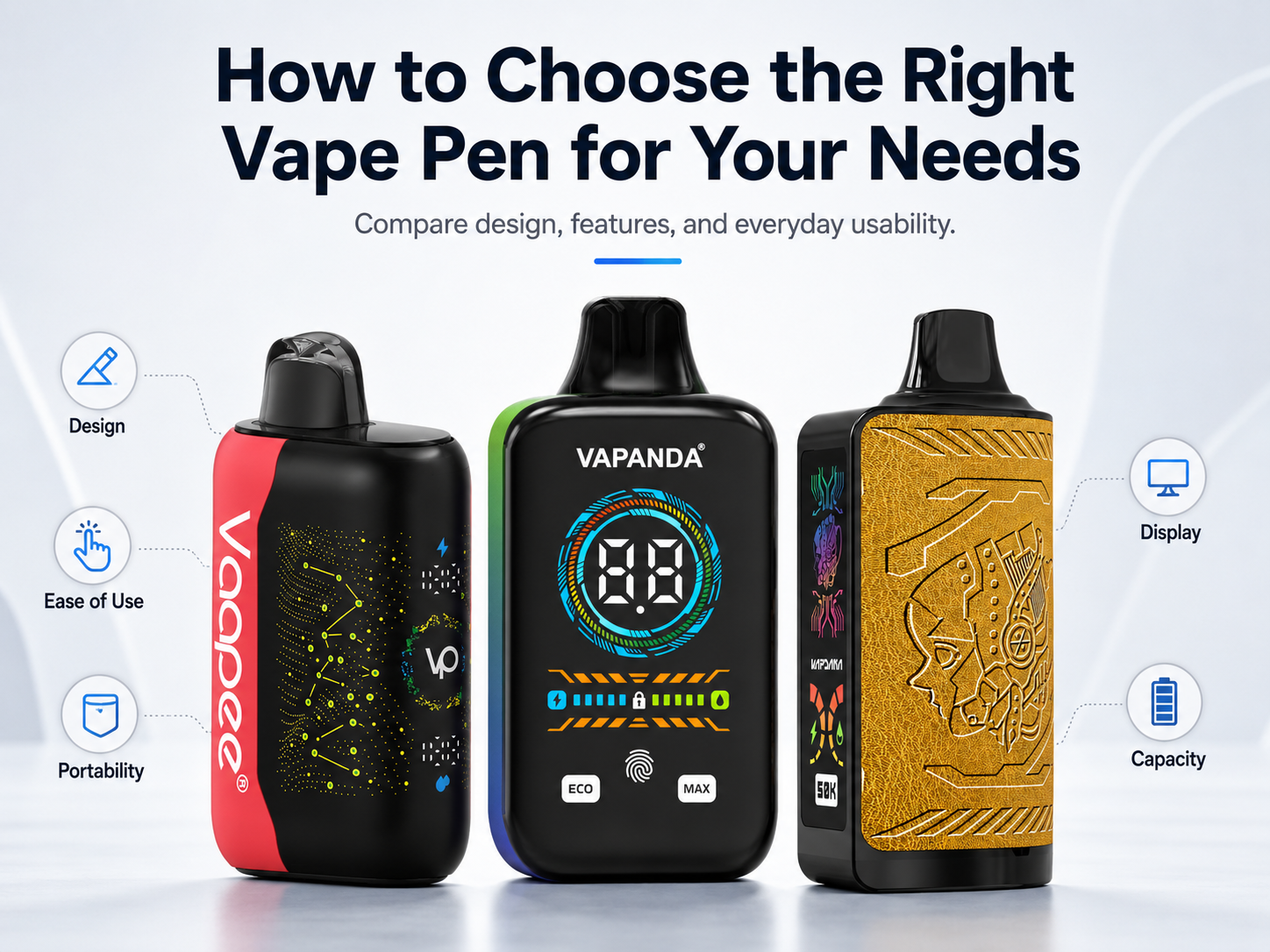
Introduction
Choosing a vape pen in 2026 is no longer only about appearance or flavour options. With the development of refillable systems, pre-filled pod devices, and rechargeable vape formats, consumers now have more choices than ever.
The right vape pen depends on several factors, including device type, battery system, maintenance requirements, coil technology, e-liquid compatibility, and regional regulations.
For European consumers, understanding product specifications and compliance information is an important part of choosing a vape device. Nicotine-containing vape products sold in the EU must follow requirements under the Tobacco Products Directive (TPD), including rules related to nicotine strength, packaging, and product information.
What Is a Vape Pen?
A vape pen is a compact electronic vaping device that uses a battery-powered heating element to vaporise e-liquid from a refillable tank, cartridge, or pre-filled pod.
Compared with larger vape mods, vape pens are usually designed around portability, simplicity, and everyday convenience. They are available in different formats, including refillable vape pens, pre-filled pod systems, and disposable vape devices.
The best option depends on whether users prioritise flexibility, convenience, or a simple ready-to-use experience.
Refillable vs. Pre-Filled vs. Disposable Vape Pens
Modern vape pens generally fall into three main categories.
| Feature | Refillable Vape Pens | Pre-Filled Pod Systems | Disposable Vape Pens |
|---|---|---|---|
| E-Liquid Source | User-filled e-liquid | Replaceable pre-filled pods | Built-in pre-filled liquid |
| Maintenance | Requires refilling and replacing components | Replace pods when empty | Minimal maintenance |
| Battery System | Usually rechargeable | Usually rechargeable | Depends on product design |
| Flexibility | High control over e-liquid choice | Balance between convenience and control | Simple operation |
| Best For | Users who prefer customisation | Users who want easy maintenance | Users prioritising convenience |
Refillable Vape Pens
Refillable vape pens allow users to add compatible e-liquid and replace parts such as pods or coils when needed.
Key advantages include:
- More flexibility with e-liquid options
- Reusable device hardware
- Greater control over the vaping setup
- Less dependence on replacing the entire device
However, refillable systems require regular maintenance. Users may need to refill e-liquid, clean components, and replace coils or pods according to manufacturer recommendations.
For consumers who prefer a reusable format and more control over their device, refillable vape pens remain one of the most flexible options.
Pre-Filled Pod Systems
Pre-filled pod systems are designed to offer a balance between refillable devices and disposable vape pens.
Instead of adding e-liquid manually, users replace a pre-filled pod when it is empty. The battery hardware can usually be reused, while the pod contains the e-liquid and heating component.
Advantages include:
- Simple pod replacement
- Less maintenance compared with open refillable systems
- Rechargeable device design
- Consistent operation
The main consideration is that users are limited to the pod options, flavours, and nicotine strengths available from the manufacturer.
Disposable Vape Pens
Disposable vape pens are designed for simple operation. They usually come pre-filled and require no refilling or coil replacement.
Advantages include:
- Easy operation
- Portable design
- Minimal maintenance
However, disposable vape products have received increased attention in Europe due to concerns about single-use electronic waste. The European Commission waste and recycling information provides guidance on EU waste management and recycling requirements.
Consumers should also check local regulations, as rules for disposable vape products may differ between EU countries.
Vape Pen vs Pod System: What Is the Difference?
Although the terms are sometimes used interchangeably, vape pens and pod systems can have different designs.
A traditional vape pen usually refers to a slim, pen-shaped device with a battery and a refillable tank or cartridge system.
A pod system typically uses replaceable pods that contain either e-liquid or a built-in coil.
| Vape Pen | Pod System | |
|---|---|---|
| Design | Often pen-shaped | Usually compact pod-based |
| E-Liquid | Often refillable | Refillable or pre-filled pods |
| Maintenance | May require coil or tank care | Usually focused on pod replacement |
| Flexibility | Often higher | Depends on pod availability |
The choice depends on whether users prefer more control or a simpler replacement system.
Key Features to Consider When Choosing a Vape Pen
1. Battery and Charging Options
Battery design directly affects convenience and everyday usability.
Important factors include:
- Battery capacity
- Charging method
- Device size
- Rechargeable design
Many modern vape pens use USB Type-C charging because it has become a widely adopted charging standard for consumer electronics.
A well-designed battery system should balance portability, charging convenience, and reliable daily performance.
2. Coil Technology and Resistance
The coil is one of the most important components inside a vape pen because it heats the e-liquid.
Different coil designs can influence:
- Flavour consistency
- Heating performance
- Airflow experience
Many modern devices use mesh coil technology. Compared with traditional wire coils, mesh coils use a larger heating surface, helping distribute heat more evenly across the e-liquid.
Coil resistance also affects the vaping style:
- Higher resistance coils are commonly used in lower-power mouth-to-lung (MTL) devices with a tighter draw.
- Lower resistance coils are often used in higher-power devices with warmer vapour and more open airflow.
Consumers should always check coil specifications to ensure compatibility with their preferred device.
3. E-Liquid Compatibility
For refillable vape pens, e-liquid compatibility is an important consideration.
Before choosing a device, users should check:
- Compatible e-liquid types
- Pod or cartridge compatibility
- Available nicotine options in their region
In the EU, nicotine-containing e-liquids must comply with TPD requirements. These include:
- Maximum nicotine concentration of 20mg/ml
- Maximum 10ml capacity for nicotine-containing refill containers
- Maximum 2ml capacity for tanks or cartridges containing nicotine e-liquid
For more details, visit the European Commission Tobacco Product Regulation information.
Vape Pen Regulations in the EU
The European vaping market follows specific requirements designed to improve product transparency and consumer protection.
EU regulations cover areas such as:
- Product notification
- Ingredient information
- Packaging requirements
- Health warnings
- Nicotine limits
When choosing vape products, consumers should pay attention to clear product specifications, manufacturer information, and compliance details.
Transparent product information helps consumers better understand device features and regional requirements.
How to Choose the Right Vape Pen in 2026
Before purchasing a vape pen, consider the following factors:
Convenience vs. Flexibility
Consumers looking for minimal maintenance may prefer pre-filled pod systems or simpler formats.
Those who want more control over e-liquid choices, coil options, and device settings may prefer refillable vape pens.
Maintenance Requirements
Different vape formats require different levels of care.
Consider whether you prefer:
- Refilling e-liquid
- Replacing pods
- Replacing coils
- Using a ready-to-use format
Product Transparency
Reliable vape products should provide clear specifications, manufacturer information, and compliance details.
For consumers comparing vape pen options, product transparency, manufacturer information, and clear specifications can make the selection process easier.
Some manufacturers, including Vaapee, provide detailed product information to help users understand different device formats.
FAQ About Vape Pens
Are vape pens rechargeable?
Many modern refillable and pre-filled pod vape pens include rechargeable batteries. Some disposable formats are designed for limited use, while others may include rechargeable charging systems depending on the product design.
Are refillable vape pens better than disposable ones?
Both formats have different advantages. Refillable vape pens provide more flexibility and reusable hardware, while disposable vape pens focus on simplicity and convenience.
What is the difference between a vape pen and a pod system?
A vape pen usually describes a compact vaping device format, while pod systems use replaceable pods containing e-liquid or coils. Some modern devices combine features from both categories.
How long does a vape pen last?
The lifespan of a vape pen depends on factors such as battery capacity, usage frequency, coil condition, and device design. Rechargeable devices can usually be maintained by replacing compatible components when required.
Are vape pens regulated in Europe?
Yes. Nicotine-containing vape products sold in the EU must follow applicable requirements, including TPD rules related to nicotine limits, packaging, and product information.
Final Thoughts
Choosing a vape pen in 2026 is about finding the right balance between convenience, device features, maintenance requirements, and regulatory compliance.
Understanding the differences between refillable vape pens, pre-filled pod systems, and disposable formats can help consumers make a more informed decision.
Before choosing a device, consumers should consider battery design, coil technology, e-liquid compatibility, and product transparency to find an option that matches their preferences and local requirements.
Disclaimer (21+ ONLY)
This article is provided for informational purposes only.
Vaping products may contain nicotine, which is an addictive substance. These products are intended for adult users only and should be used in accordance with applicable laws and regulations.
Vape products are strictly intended for adults aged 21 or above. Availability, product requirements, and regulations may vary by country within the EU.
Consumers should always check local laws and regulations before purchasing or using vaping products.