In the EU vaping market, “e-liquid” and “nicotine salts” are often mentioned together, which can make them sound like two competing products. In reality, they are better understood as two layers of the same system: one refers to the base liquid used in vaping, while the other refers to the type of nicotine inside that liquid.
The distinction matters less in chemistry terms and more in how modern devices are designed and used across Europe.
What “E-Liquid” Means in the EU Context
E-liquid is the general term for the liquid used in all vaping devices. No matter whether it is used in a disposable vape, a pod system, or a refillable tank, the internal liquid always falls under this category.
In the EU, e-liquids are regulated under the Tobacco Products Directive (TPD), which sets limits on nicotine strength and packaging formats.
Under this framework, nicotine-containing e-liquids are subject to rules such as:
· Maximum nicotine strength of 20mg/ml
· Maximum bottle size of 10ml for nicotine-containing liquids
· Mandatory safety warnings and packaging requirements
These rules shape not only product design but also how users interact with vaping products in practice.
From a usage perspective, e-liquid appears in three common situations today:
· Refilling open pod or tank systems
· Pre-filled pods
· Inside disposable vape devices
In many cases, especially in the disposable segment, users never directly handle the liquid itself.
What Nicotine Salts Actually Change
Nicotine salts (often called “nic salts”) are not a separate product category, but a different form of nicotine used inside e-liquid.
Compared to traditional freebase nicotine, the key difference is how the nicotine behaves when inhaled.
In practical use, nic salts tend to:
· Feel smoother at higher strengths
· Deliver nicotine more quickly
· Work efficiently in low-power devices
This is why they are commonly used in:
· Pod systems
· Starter kits
· Disposable vape devices
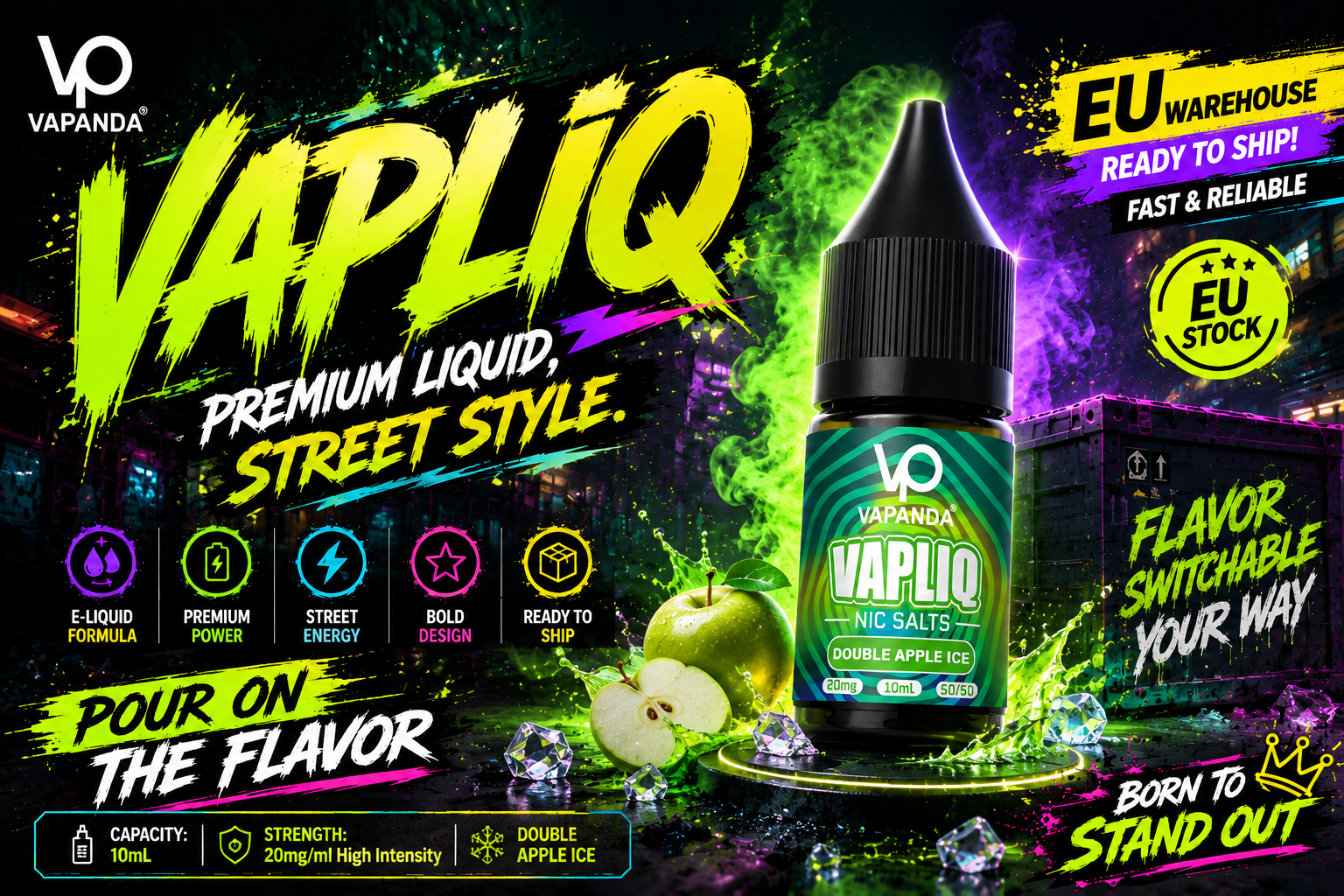
In EU retail environments, nic salt liquids are usually sold in 10ml bottles due to TPD restrictions, with nicotine levels typically staying within the 20mg/ml limit.
For information on regulatory requirements applicable to vaping products in the UK, readers can refer to the Medicines and Healthcare products Regulatory Agency (MHRA) guidance on e-cigarette product notification and regulation.
Why Nic Salts Became the Default in Many EU Devices
One noticeable shift in the EU market is not just the popularity of nicotine salts, but how closely they are tied to device design.
Low-power systems like pod devices and disposables don’t operate in the same way as traditional high-wattage vape mods. They produce less vapor per puff, which changes how nicotine needs to be delivered.
Nic salts fit this environment because they allow:
· Faster nicotine absorption in low vapor output devices
· A smoother experience even at higher concentrations
· Consistent delivery without requiring large clouds or high power
As a result, many entry-level vape products in Europe are now built around nicotine salt formulations rather than freebase liquids.
Freebase vs Nic Salts in Real Use
Instead of focusing on chemistry definitions, the difference becomes clearer when looking at how people actually use these products in the EU market today.
| Column 1 | Column 2 | Column 3 | Column 4 |
|---|---|---|---|
| Feature | Freebase E-Liquid | Nicotine Salts | Disposables (Pre-filled) |
| Best Suited For | Refillable tank systems & larger vape mods | Pod systems & compact starter kits | Pre-filled, all-in-one disposable devices |
| Nicotine Strength | Typically lower (3mg/ml - 12mg/ml) | Higher, up to the EU legal limit (20mg/ml) | Pre-filled at maximum EU limit (20mg/ml) |
| Throat Hit | More noticeable, harsher at higher strengths | Much smoother, even at 20mg/ml concentration | Extremely smooth with optimized cooling/sweetness |
| Vaping Style | Customizable (variable wattage, cloud chasing) | Discrete, focused on quick nicotine satisfaction | Plug-and-play, consistent but zero customization |
| Maintenance | Requires manual refilling and coil changes | Requires refilling or replacing pre-filled pods | No refilling, charging, or maintenance required |
The Real Shift: From “Liquid Choice” to “Device Choice”
One of the more significant changes in the EU vaping market is that users are increasingly not choosing e-liquid as a standalone product.
Instead, they are choosing a device, and the liquid comes as part of that system.
This is especially visible in disposable vape products, where:
· The liquid is sealed inside the device
· Nicotine strength is pre-determined
· Coil and liquid are designed as a single unit
In this sense, e-liquid has become less of an independent product and more of an internal component of device ecosystems.
Why 10ml Nic Salt Bottles Still Exist in Europe
Even with the growth of disposable vapes, 10ml nicotine salt bottles remain standard in EU markets.
This is mainly due to regulatory structure under the TPD:
· Nicotine-containing liquids are limited to 10ml bottles
· Maximum nicotine strength is capped at 20mg/ml
· Larger bottles (such as shortfills) must be nicotine-free and require separate nicotine shots
This regulatory setup keeps refillable pod systems relevant, even in markets where disposables are widely used. It is why you can still find a wide range of these standard 10ml nicotine salt e-liquids available on vape platforms like Vaapee to support open device users.
FAQ: E-Liquid & Nic Salts in the EU
1. Are e-liquid and nicotine salts completely different products?
Not exactly. E-liquid is the overall category, while nicotine salt refers to a specific type of nicotine used inside that liquid. In most EU retail environments today, nicotine salts are more commonly found in pod systems and disposable devices.
2. Which is better for beginners in the EU: nic salts or freebase e-liquid?
Nicotine salts are usually better for beginners because they provide a smoother throat hit at higher nicotine strengths. In the EU, they are commonly used in pod systems and disposable vapes designed for simple use.
3. Are nic salts banned in Europe?
No. Nicotine salts are not banned in Europe. They are legal under the EU Tobacco Products Directive (TPD), as long as products comply with rules such as the 20mg/ml nicotine limit and 10ml bottle restriction for nicotine-containing liquids.
4. What is the difference between nic salts and regular vape juice?
Nic salts use a different form of nicotine that feels smoother at higher strengths, while regular freebase e-liquid has a stronger throat hit and is often used in higher-wattage vape devices.
5. Why are nic salts more common in EU vape products?
Because many EU devices are low-power pod systems or disposables. Nic salts work better in these devices by delivering nicotine quickly without requiring large vapor production.
6. Can nicotine salts be used in any vape device?
They can technically be used in many devices, but they are generally intended for low-power systems like pods. High-powered sub-ohm devices are not suitable because they can deliver nicotine too quickly, leading to discomfort.
7. What is the EU rule for nicotine e-liquids?
Under the EU TPD framework, nicotine-containing e-liquids are limited to 10ml bottle size and a maximum strength of 20mg/ml. Larger bottles must be nicotine-free and used with separate nicotine shots.
8. Is the liquid inside a disposable vape different from bottled e-liquid?
Chemically, it is not fundamentally different. It typically contains the same core components (PG, VG, flavorings, nicotine salts), but is optimized for a specific device’s coil and airflow system.
9. Where can I see examples of EU vape product structure?
Some EU-focused vape retailers organize products around disposable devices and 10ml nicotine salt e-liquids, such as VAAPEE.
Disclaimer (21+ Only): This content is for informational purposes only. Vaping products may contain nicotine, which is an addictive substance. They are strictly intended for adults aged 21 or above and must be used in accordance with local laws and regulations. Availability and regulations may vary by country within the EU.